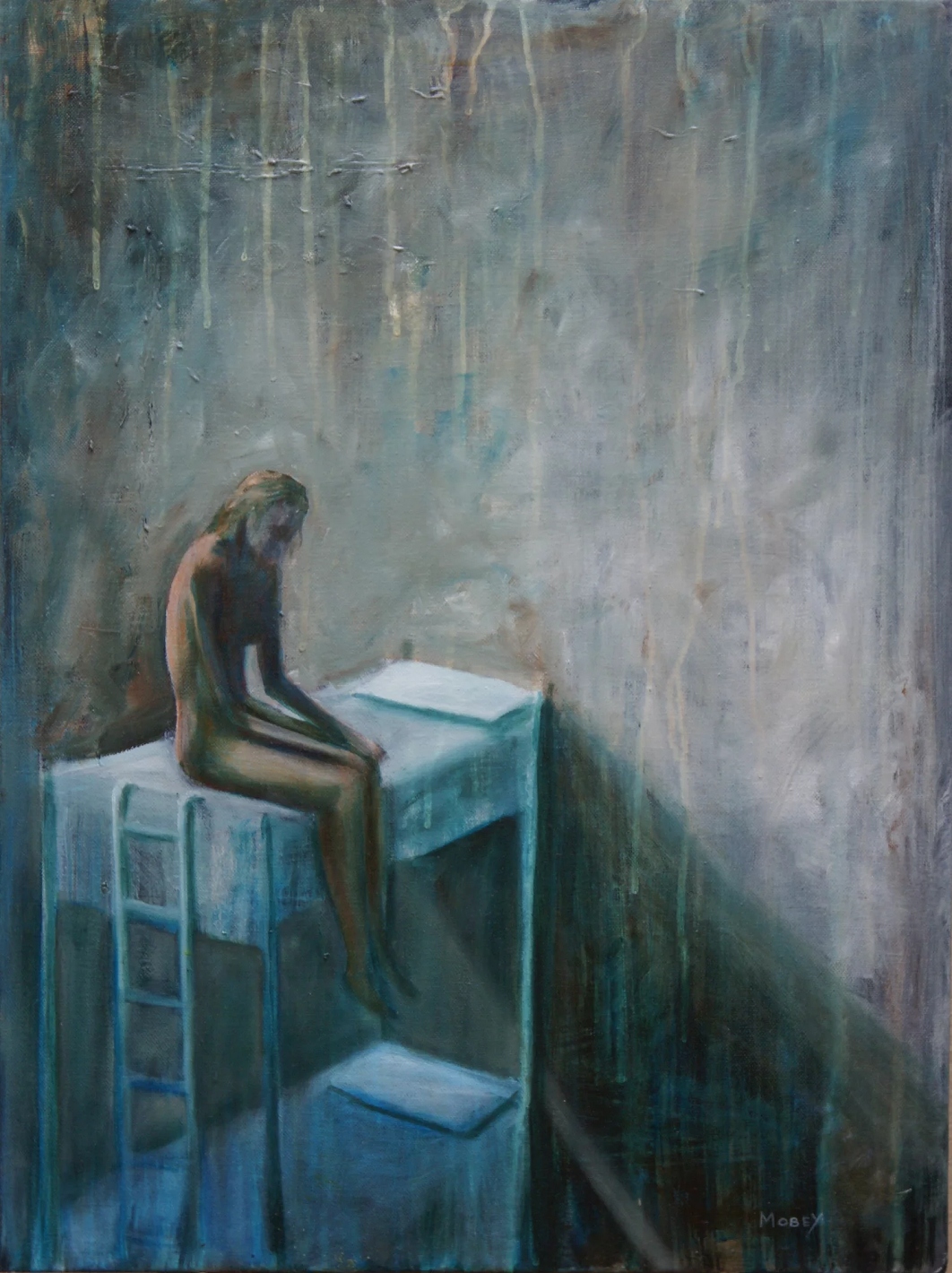
The Fear of Grief will Kill You
People will do just about anything to avoid grief. Shame comes in a close second, but grief is so painful, and so universal, that it barely ever gets credit as a driving force outside of its acute phase.
This is my understanding of coercive control. A subject that runs the lives of many, and that has profoundly affected me in ways that shaped my life, and my art. This is not an academic paper, though I hope it contributes to the field and to those who work in it, or those of us who survive the experiences.
We might desperately want to believe that only deficient people could possibly succumb to manipulation, but there is a growing body of countervailing literature: Robert Jay Lifton’s eight criteria for thought reform, Steven Hassan’s BITE model, Judith Herman’s trauma recovery staging, and Alexandra Stein’s application of attachment theory to cultic bonding. Bowen theory’s “designated patient” dynamic describes the mechanism, albeit for a single use-case. A crude summary of the current literature would be that all high-control groups, families or even workplaces, share some common features: pervasive control over behavior, information, thoughts and emotions, while recovery requires distance, safety, mourning and reconnection, though attempting that escape or individuation invariably causes shunning, scapegoating, or designation as a “problem child”.
While exit remains impossible for some, it is apparently easy for others. Grief, or the fear of grief, seems to me to be the missing link.
In all cases the cultivation of disorganised attachment, where leaders intentionally or unintentionally position themselves as both the primary threat and the only source of safety, explains how bonding and even genuine familial love, persist despite awareness of harm.
Some groups even have a deliberately designed, layered entry architecture: using curiosity, and valid human needs for connection to introduce love-bombing, material or spiritual promises and eventually sunk-costs that allow the next system in the sequence to start operating. From the outside everything looks safe and normal. People can apparently leave, or have normal lives, therefore the group seems benign. In child protection services, these systems are often well documented in the form of “impression management” or “performative parenting”.
What the system is designed to produce over time is an incremental dissociation delivery system where each incremental layer of “closeness” or status normalises what would have been unthinkable at the point of entry, or possibly even a week before. In domestic violence, the abusive tactics are milder at first, testing to see if the victim will notice, building up over time and with increasing isolation of the victim. Of course, for children born into a high-control family or cult, these horrors are just an average Tuesday.
In all high-control situations, individuation is demonised, even criminalised. In particularly fanatical groups and families, many children are even institutionalised when the attempts at thought and behaviour control fail. Identical things have been reported in high-control religions and institutions, including parents becoming convinced that a child is possessed, tragically resulting in worse abuse and even deaths.
This real danger may ironically cause some parents and loved ones within the group to police behaviour of other members out of fear that that person may be shunned, hurt or damned within the ideology due to unsanctioned thoughts or behaviours.
The general conversation around these groups and families currently acknowledges ostracisation, shunning and exile as punishment in survival terms. What they don’t seem to say is that losing your home, losing family, is grief. Betrayal and scapegoating are a full-throated wail in the lonely void. And most people will kill to avoid that.
Losing family is the stuff of nightmares, in a very literal sense. For those born into cults, there is the added loss of identity. While recruits and converts most likely had an identity and personality before the cult, those born into coercively abusive groups and families do not, so in addition to the loss of safety and the shame that’s become a part of their world-view, people fear the loss of their family, identity, or even god. The primary force of entrapment is that people will do almost anything to avoid grief.
“No regrets” is aspirational, and cliched enough to be a tattoo, but you cannot leave abuse without regret. All abuse sparks regret in victims. That’s some of the reason we stay: to try and finally fix it so that we can leave without regrets. The Catch-22 will kill you.
Grief is also not “mourning” which happens after the fact, hopefully in a healthy way. Grief and the avoiding of grief is myopic and overwhelming; there is no space for thought. Yes, it is traumatic, but grief is not trauma, it is before trauma because it happens to everyone without exception. It is its own thing.
Horror is also very real for people who have been through various forms of torture and abuse: especially those forced to torture and abuse others. Further, once someone has engaged in harmful behaviours within a high-demand group, they have perpetrated the very things they would have to reject in order to escape. For some this may be recruiting and then abandoning vulnerable people within the group, in darker cases someone enmeshed in an abusive ideology may overtly perpetrate violence or other abuses on children, loved ones or innocents outside the group. For child soldiers it is attempting to be a person after being a monster, by any definition of that term. Facing that reality is only partly addressed by shame. Horror, grief and loss of innocence are genuine and deeply awful traumas in their own right.
Recovery that focuses entirely on shame, personal safety and “false beliefs” also misses or trivialises what may be the primary component of trauma for survivors: unimaginable loss and grief. Failing to escape is not always contingent on changing a false belief about the self or the leader: it is all too frequently a rational anticipation of a total and unsurvivable loss, especially when faith or family are involved.
Recognition of this grief and horror, or the understandable dissociation from it, is not a state we currently have any words for within the literature, though it exists in art. Pink Floyd’s “The wall” is a monumental example of a personality warped into the thing that damaged it.
I have always found it disturbing that a majority of romantic and worship music is degrading, humiliating the worshiper as a sort of purging, scouring of the self in order to be worthy of love or even life. It’s a distilled expression of the mechanism of control though: Only the other/family/religion/ideology redeems them from their basic and fundamental empty/worthless/sinful nature. There is something wrong with you, that you can’t escape or cure without that sacred other. Children born into these ideologies get told they’re damaged, worthless, or sinners from infancy. No self is ever permitted to develop outside of the pervasive control of the ideology.
Since the fundamental self is “bad”, leaving the cult means losing any hope of escaping that state. Inherent self-loathing makes it almost impossible to believe one’s own thoughts, doubts or integrity. Anything pulling you away from salvation cannot be good. This makes escaping into a fundamentally awful thing, cruel to both yourself and those you love.
Marlene Winell said “ideas can be abusive; especially when you teach them to a child”. So if you are not safe and you do not have the agency to make yourself safe, there is no way to reason your way out of it. Even a wrong thought can damn you, and the minute you really look at it, you’re going to lose your family.
For people thus transformed, dissociation or fanaticism becomes a permanent adaptation, the only alternative to a reckoning that would be unsurvivable.